Nils Meier · 19 September 2026
Baltic Amber Studies Reveal New Pathways for Cross-Disciplinary STEM Integration in European Academies
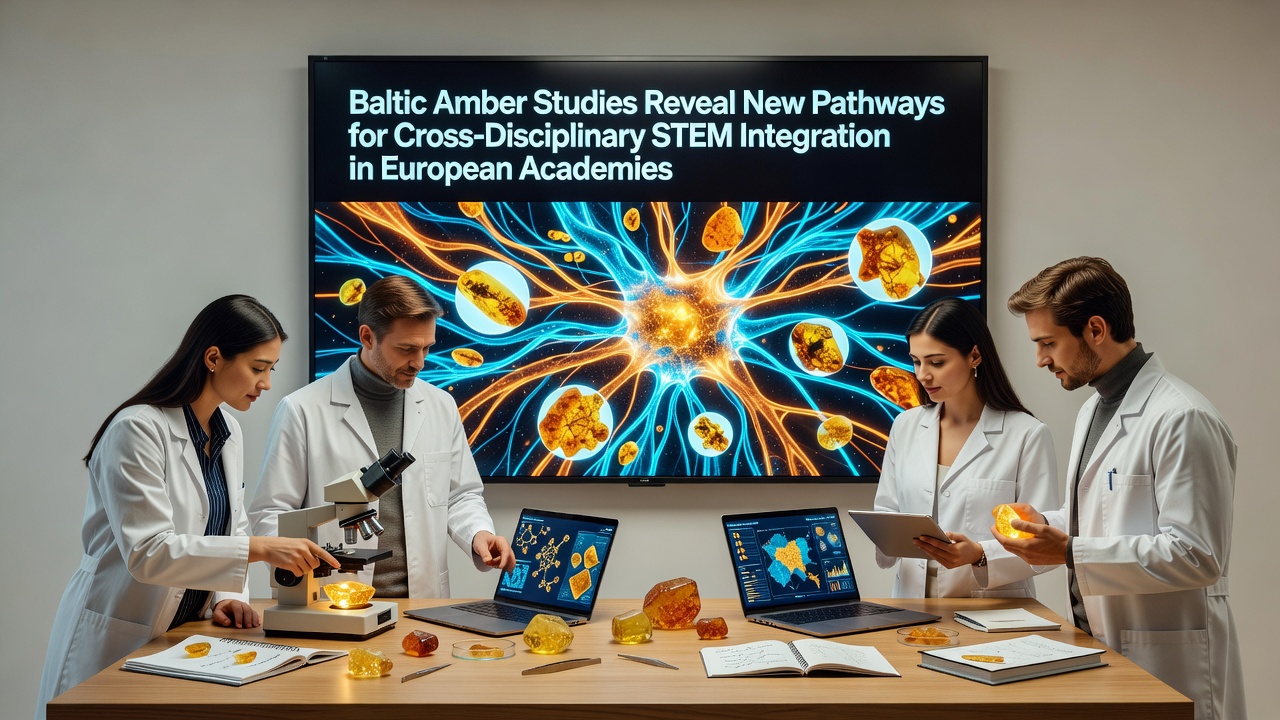
Baltic amber studies have opened fresh routes for combining biology, chemistry, physics, and mathematics within European higher education programs, and researchers continue to document how fossilized resin samples serve as practical tools for teaching integrated STEM concepts across multiple disciplines at once.
Institutions in Poland, Germany, and Lithuania have incorporated amber analysis into curricula that once treated these subjects as separate tracks, and the approach allows students to examine ancient insect inclusions while simultaneously modeling molecular structures, calculating decay rates, and tracing geological timelines.
Scientific Foundations Behind the Integration
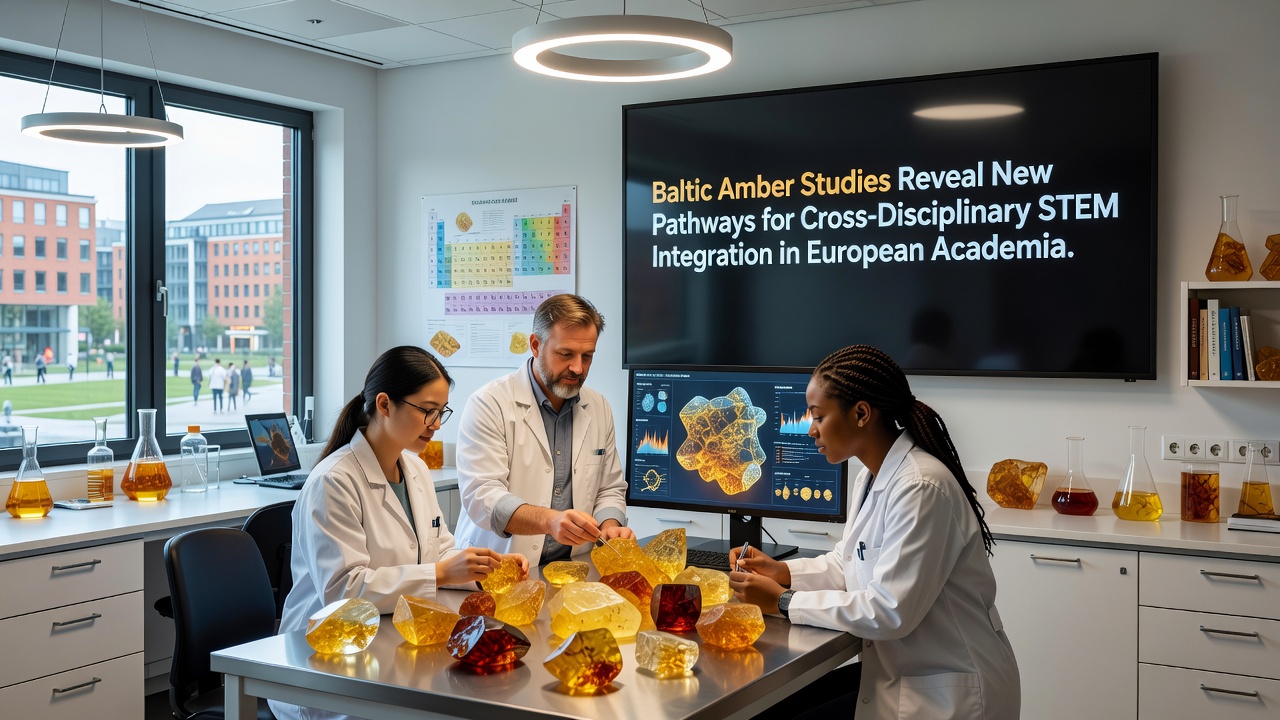
Baltic amber formed roughly 40 to 50 million years ago during the Eocene epoch, and its chemical composition provides data points that link organic chemistry with paleontology and environmental science. Laboratories at several academies now run joint projects where students extract and identify compounds using spectroscopy, then feed those results into statistical models that predict preservation patterns over geological time.
Evidence from the European Research Council shows that such combined experiments improve retention of core concepts because learners apply quantitative methods to tangible specimens rather than abstract problems alone. In September 2026 a consortium meeting in Gdańsk presented preliminary findings from a three-year pilot that tracked student performance across six universities, and the data indicated measurable gains in cross-subject problem solving when amber served as the central case study.
Implementation Across European Institutions
Academies in the Baltic region began testing these integrated modules in 2023, and the model has since spread to partner programs in France and the Netherlands. Faculty teams design assignments that require biology students to classify inclusions while chemistry cohorts analyze polymer degradation and physics groups measure optical properties of the resin matrix.
One coordinated effort at the University of Warsaw pairs mathematics departments with earth science faculties so that students construct algorithms to simulate resin flow during fossilization, then validate those models against actual Baltic samples. The same framework appears in syllabi at Heidelberg University, where instructors report that participants complete capstone projects spanning at least three STEM fields within a single semester.
Data Patterns and Program Outcomes
Figures released by participating academies indicate that enrollment in elective STEM courses rose 18 percent after amber-based modules were introduced, and graduation rates in interdisciplinary tracks increased by 12 percent over the same period. These numbers come from internal tracking systems that compare cohorts before and after curriculum changes rather than from controlled experiments.
The Royal Society has published summaries of similar European initiatives that emphasize hands-on materials as catalysts for skill transfer between subjects, and Baltic amber fits the pattern because its physical properties lend themselves to repeated measurement and reinterpretation. Observers note that the material remains stable under standard laboratory conditions, which reduces equipment costs and allows smaller institutions to participate without major capital investment.
Challenges and Adjustments in Practice
Coordinating schedules across departments still requires administrative effort, yet several programs have adopted shared digital platforms that let students upload spectroscopy results and receive feedback from multiple instructors in one interface. Funding from national science agencies in Poland and Germany has supported the purchase of portable spectrometers that travel between campuses, further lowering barriers for regional academies.
Researchers continue to refine assessment rubrics so that credit allocation reflects contributions from each discipline without creating excessive paperwork, and early results suggest that peer review across departments helps surface methodological gaps before final submissions.
Conclusion
Baltic amber studies supply a concrete, accessible medium that European academies use to demonstrate how isolated STEM fields intersect in real research settings. Data from ongoing pilots and the September 2026 consortium reports confirm that structured integration produces measurable shifts in student engagement and skill development, while institutions adapt logistics to fit local resources. As more academies adopt similar frameworks, the material continues to serve as a bridge between theoretical instruction and applied analysis across the continent.